Fantasy Device
Daniel and I were challenged to create a device with the following prompt:
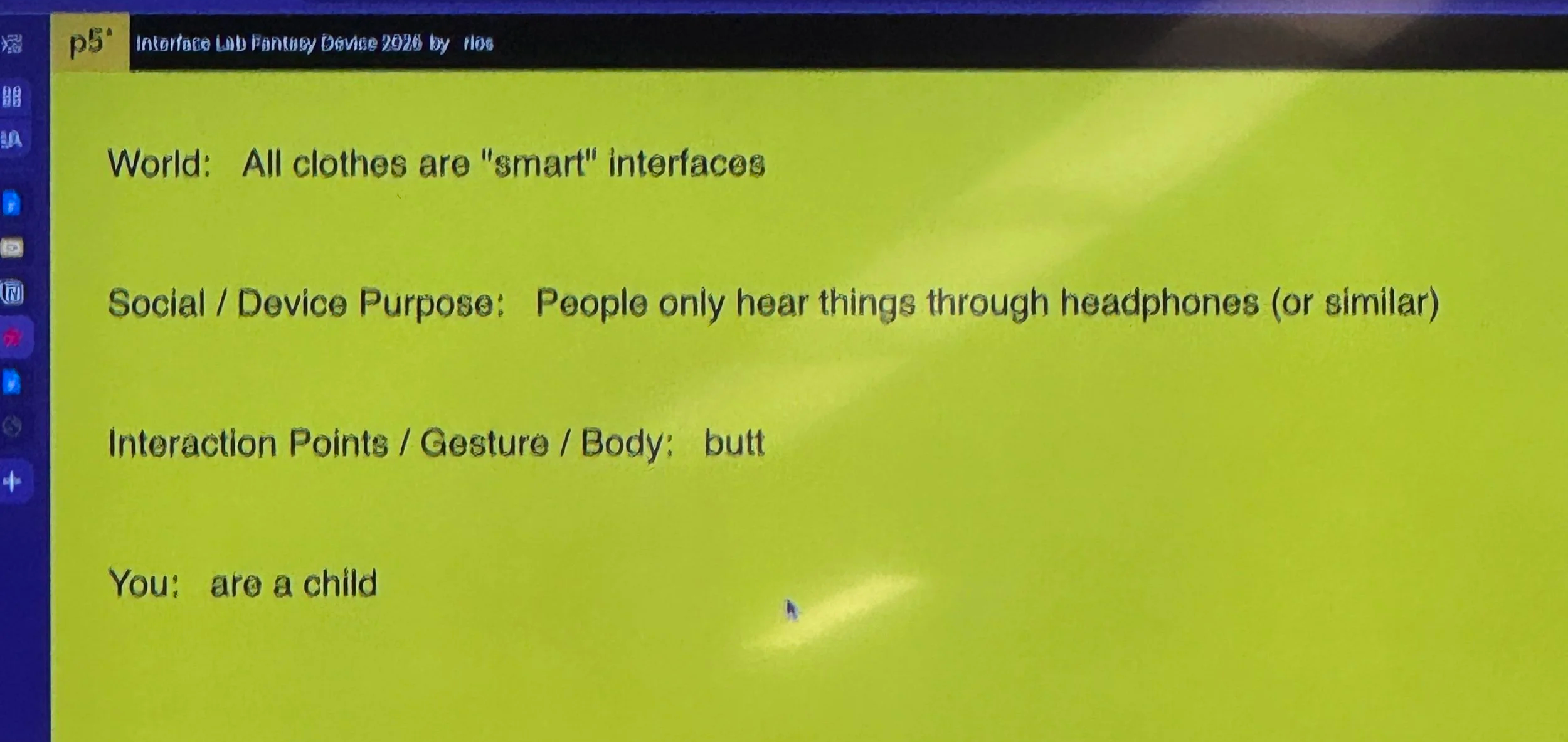
We were challenged to create a product to be used in a world where all clothes are “smart” interfaces and where people only hear through headphones. Additionally, the product had to be fun for children, and the point of interaction had to be the user’s butt.
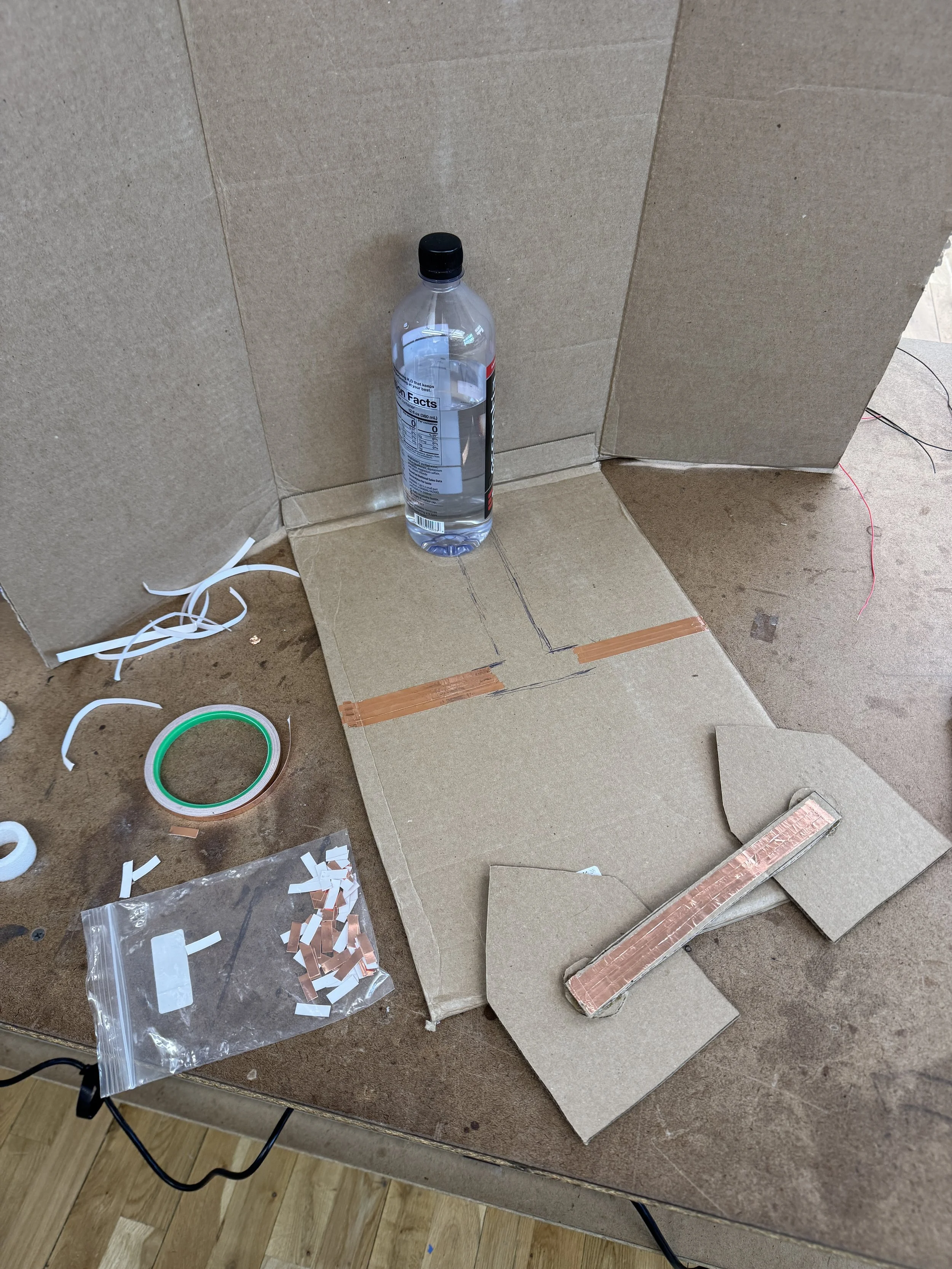
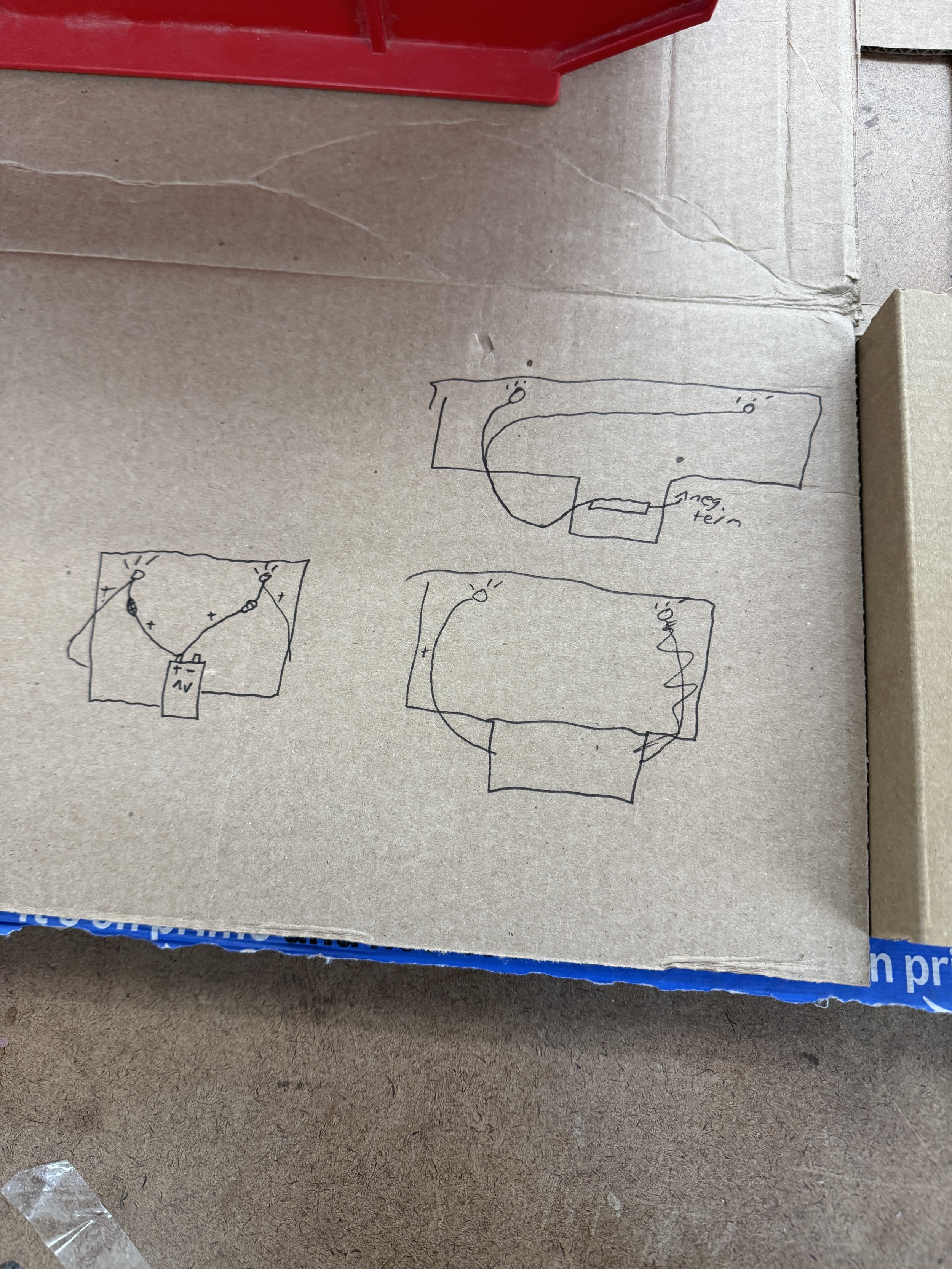
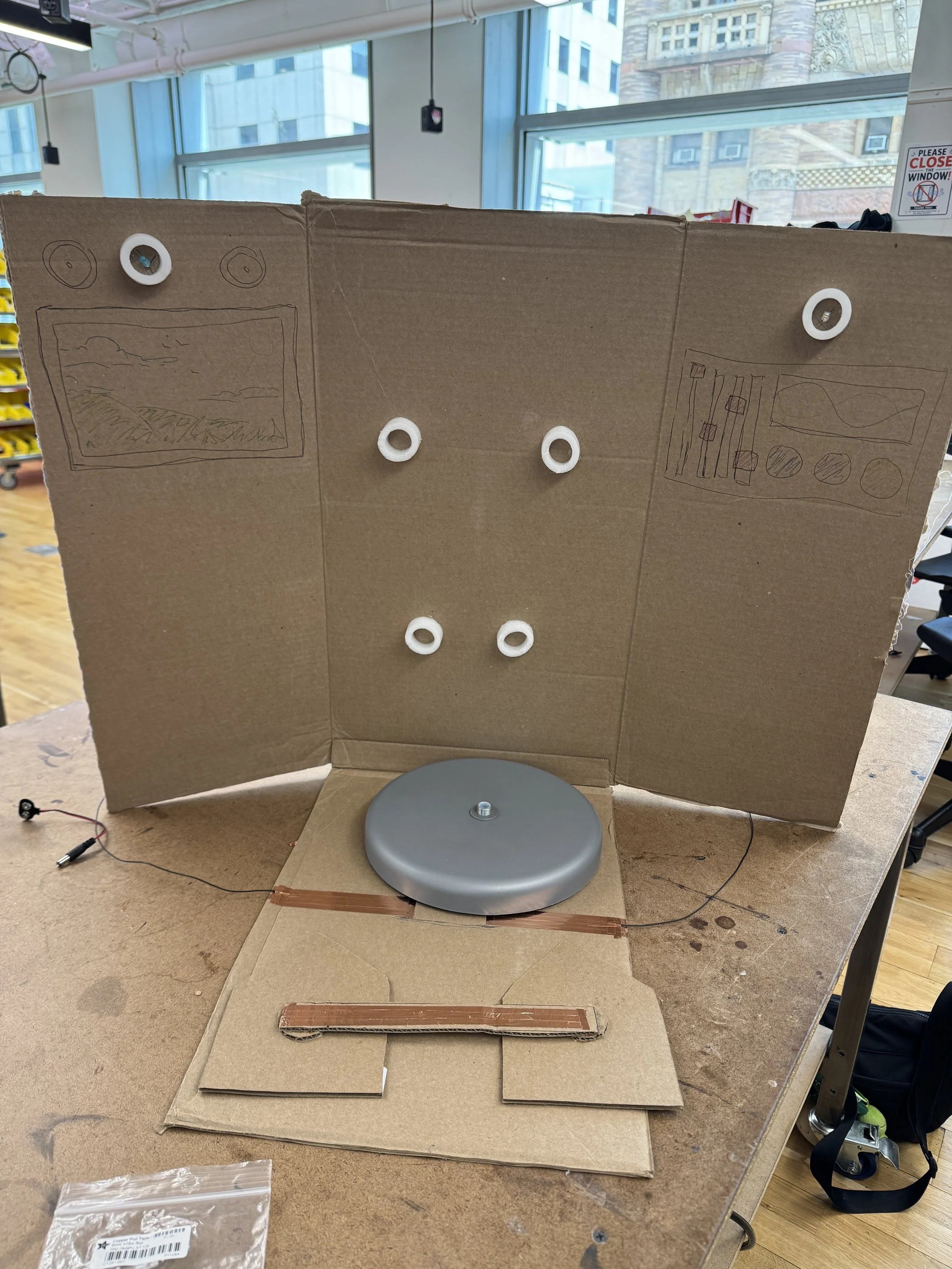
We worked on a pretty straightforward path from the start; our class’s TA, Andre, suggested that we put a conductive strip on the seat of a pair of pants that closes a circuit by sitting on a chair, and we immediately started working on that idea. After some brainstorming, we came up with an idea for a chair/media center that kids can sit on to watch video programming and charge their headphones.
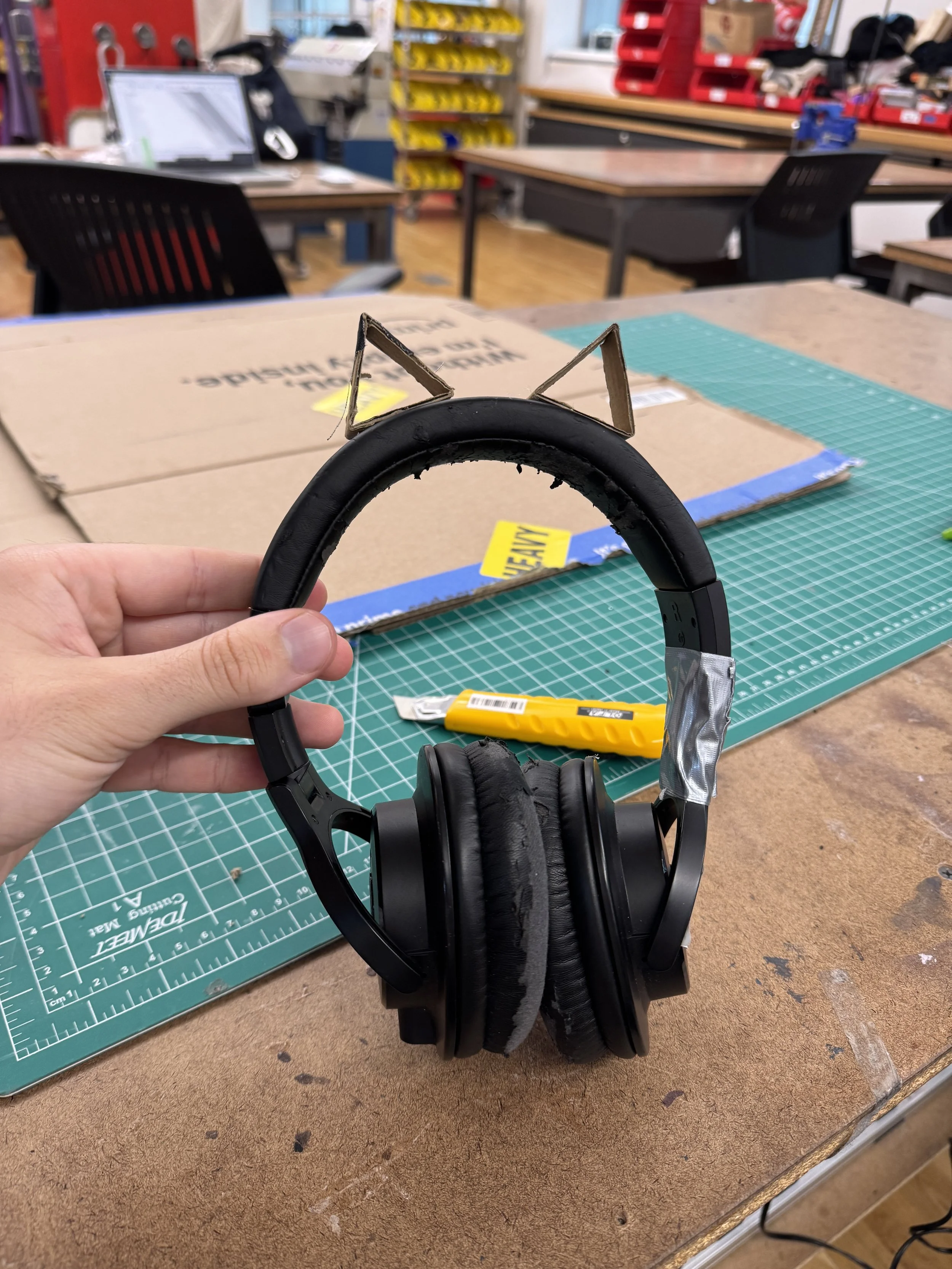
We also included a pair of headphones with cat ears on top for the kid-friendly factor:
Below is a demonstration of the product:
Project question responses
Our fantasy object explores how children could benefit in a world where “smart” clothing is commonplace. Our object is a chair and pair of conductive pants that can close a circuit to provide the user, typically children, with headphone battery and entertainment.
In a world where all clothes are “smart” objects, we are assuming that the user of our product has pants with a conductive material on the rear. In our prototype, we are representing the conductive pants with a strip of copper connected to the back pockets on a pair of “smart” pants.
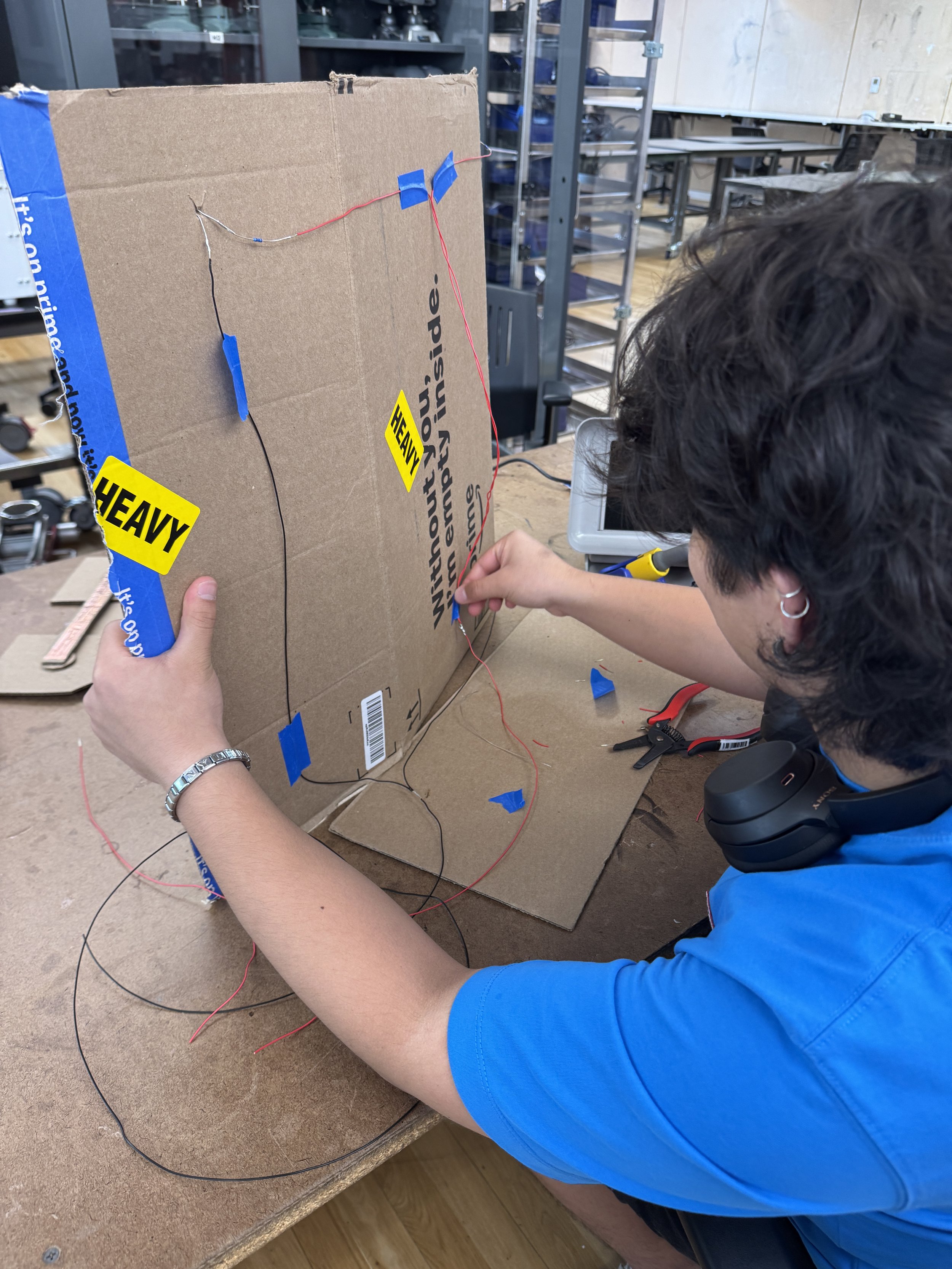
In our fantasy object, the conductive material would complete a circuit that would turn on the screen of the media center and charge the user’s headphones. For our prototype, completing the circuit just turns on a set of LED lights to the right and left of the user’s head.
Who - Who interacts with it? A person? Multiple people? Animals? Plants? Parts of an environment or ecosystem?
Our product is designed to be used by a single child at a time.
When - When does one use this device? How long, continuous, repetitive, is each interaction?
Children can use this device when instructed to by a parent or teacher for a specified amount of time.
Where - Where does one use this device? Is there a specific location (the body, the forest, a sidewalk, your kitchen)
Our device could be used in any location where it is installed with power. Classrooms, airplanes, automobiles, and the home could all host our device.
Why - Why create or engage with this device? What questions does it ask or answer? What problem does it address?
The smart chair/media center allows children to receive either educational or entertainment programming as determined by the adult setting up the device. The potential to receive entertainment may serve as incentive for a child to remain seated while their headphones charge.
How - How does a new person interact? What do they do? What do they experience? How do they read, understand, or learn the device? What (if any) emotions do you want your device to elicit from an audience? How does this device attempt to do that?
A child simply interacts with the device by sitting in the seat. Ideally, the device serves as a method of practicing patience for children, especially while receiving educational content.
In our fantasy world, adults could interact with the device through a wireless app or via an interface on the side of the chair, where they can choose what media will play and for what duration.
Hand control and visual feedback are often prioritized in interface design. Can you engage other body parts or other senses in your prototypes? Are there different physical controls, or different sensory feedback you can use to make a richer interaction?
Our device is mainly controlled by the seat of the user’s pants. In reality, the device would also provide visual stimulation.