Clown Torture
In chapter 1 of Katja Kwastek’s Aesthetics of Interaction in Digital Art, she briefly mentions Bruce Nauman’s 1970 piece titled Live-Taped Video Corridor as an example of “spatial distancing”.
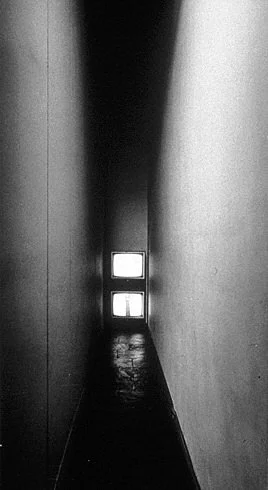
I found this piece very interesting, so I looked into more of Nauman’s work. I found a piece that he created in 1987 bleakly titled Clown Torture. Initially exhibited at the Leo Castelli Gallery in New York, the piece contains two projectors and four monitors all playing separate videos of a clown essentially descending into madness. Each screen has its own output of audio.
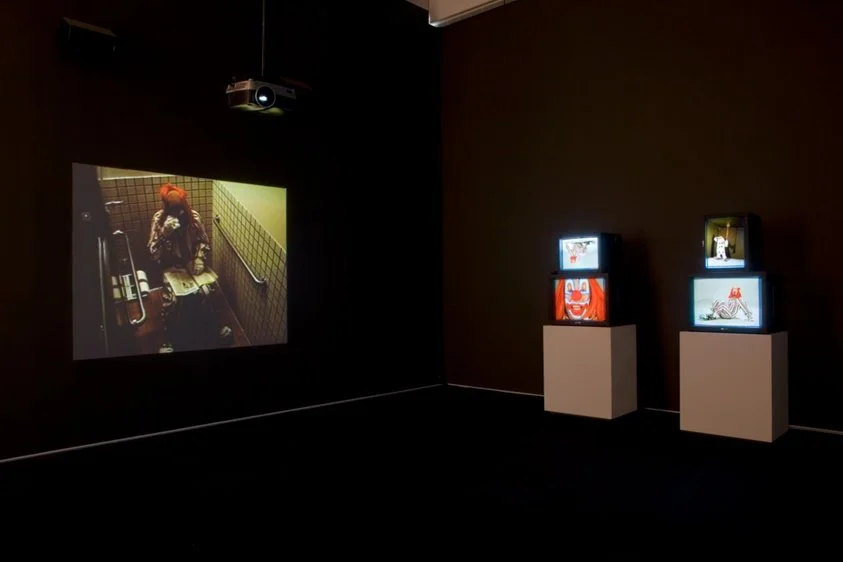
The Art Institute of Chicago describes the viewing experience as “an almost painful sensory overload”. From a clip of the piece that I found on Vimeo, I instantly understood how horrifying Clown Torture could be, especially for anyone who is fully immersed in the multiple screens playing the videos. The overstimulating and unsettling nature of the videos makes me think that “clown torture” is an action that is being committed on both the clown in the videos and the viewer themselves.
If I were to recreate Clown Torture today, I would definitely use a similar monitor setup to the one Nauman used. To create a horrifying and overstimulating piece, it’s tempting to use a room that would fully immerse the viewer (i.e. with a 360 degree video wall), but I think something about the small monitors and projected images almost makes the piece more disturbing, as it leaves more room for darkness in the corners of the room. What I would put emphasis on is the method of outputting audio; I would want a wide array of speakers designed to immerse the viewer no matter where they stand in the room.
I can’t decide if I would feature a clown in the videos being displayed. Part of what makes Clown Torture so uneasy is the repetition of the same character on every screen, plus the already creepy nature of clowns to begin with. It’s hard to come up with a subject that achieves a similar effect; to use an even scarier subject would feel like I’m trying too hard to frighten the viewer, yet to use a less creepy subject would damage the “torturing” effect of the installation.